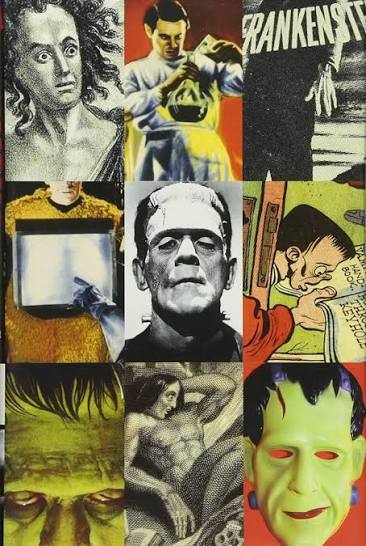
Susan Hitchcock, A Cultural History of Frankenstein
(2007)
** Homework Questions **
4:
- In what way, according to Hitchcock, did Frankenstein
emerge at "a turning point in Western history" (4)?
- What, according to Joseph Campbell. is the "quintessential
myth" of Western Culture?
- What lessons, according to Hitchcock, do the stories of
Prometheus, Adam and Eve, and Faust offer their readers?
5:
- How, according to Hitchcock, are these two archetypal myths
contradictory?
- How, according to Hitchcock, does the tension between these
myths present itself in contemporary times?
- How, according to Hitchcock, are these mythic views
represented in Frankenstein?
6:
- Explain: "The dark possibility of a godless world permeates
the novel and carries through every retelling" (6).
8:
- How, according to Hitchcock, do "millions [today] know the
monster without having ever read the novel" (8)?
10-11:
- Explain Hitchcock's guiding assumption for her book.
11:
- Explain Hitchcock's "two important stylistic decisions"
(11).
Other Discussion
Questions:
6:
- Explain: "All great myths balance irreconcilable opposites"
(6).
7:
- Explain: "The myth of Frankenstein has accumulated meanings
since its birth" (7).
12:
- Explain: "Like myth and dream, Shelley's tale contains
multitudes" (12).
- Explain: "This is our monster. To know him is to know
ourselves" (12).